
Finding Your Ikigai
A Reflective Journey to Discover Your Purpose
Introduction to Ikigai
Ikigai (pronounced ee-key-guy) is a Japanese concept that combines the terms “iki” (life) and “gai” (worth or value). It is often translated as “a reason for being” or “that which makes life worth living”.
Finding your Ikigai involves discovering the intersection of four essential elements:
- What you love – activities and pursuits that bring you joy
- What you’re good at – your skills, talents, and natural abilities
- What the world needs – contributions that serve others and society
- What you can be paid for – activities that can provide financial sustainability
The Japanese approach to Ikigai encompasses more than career fulfilment—it’s about finding meaning in everyday life. As you work through this worksheet, remember that Ikigai is not necessarily about finding a perfect job, but rather about cultivating a meaningful existence through various aspects of your life.
The Ikigai Model
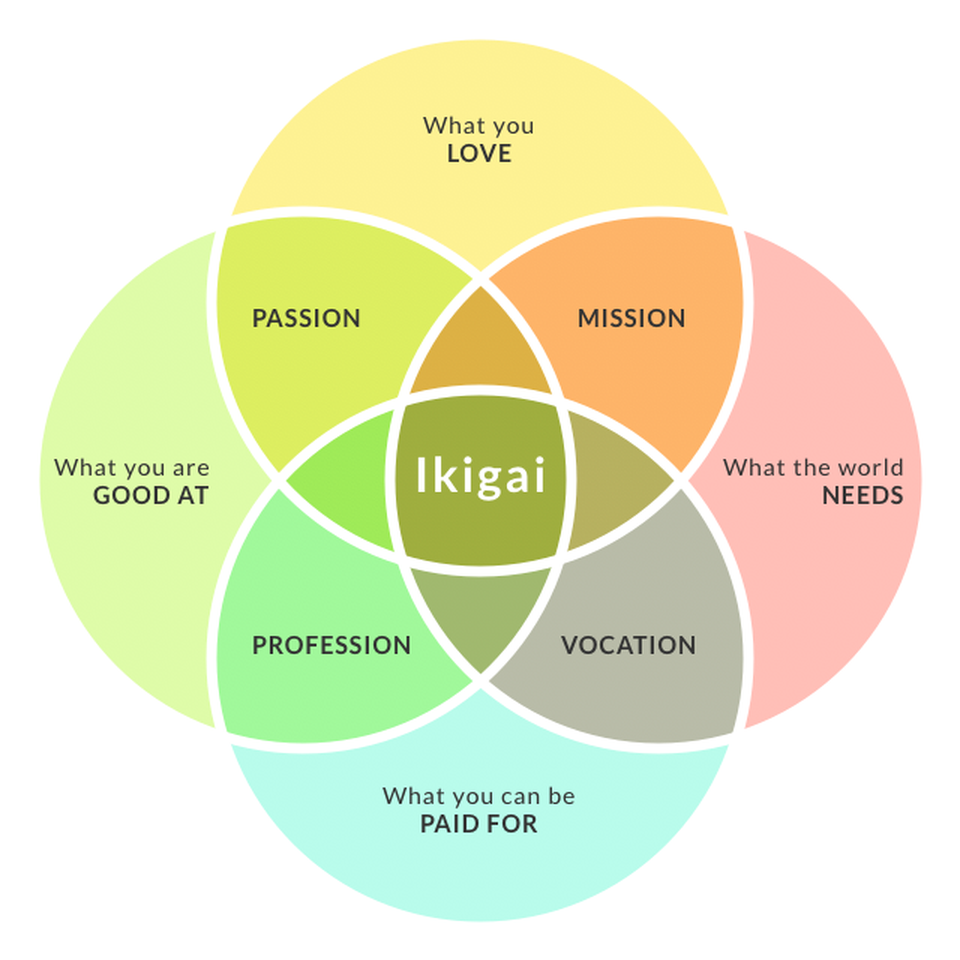
The intersections create four meaningful concepts:
- Passion: What you love and what you’re good at
- Mission: What you love and what the world needs
- Vocation: What you’re good at and what you can be paid for
- Profession: What the world needs and what you can be paid for
When all four elements overlap, you discover your Ikigai—your reason for being that brings fulfilment and purpose.
Self-Reflection: Exploring the Four Elements
Take time to reflect deeply on each component. Write your honest thoughts without self-editing or judgment.
What You Love
This element focuses on activities that bring you joy, fulfilment, and energise you.
What You’re Good At
This element focuses on your natural talents, acquired skills, and areas of expertise.
What the World Needs
This element focuses on contributions that serve others and address real-world challenges.
What You Can Be Paid For
This element focuses on activities that provide financial sustainability in your life.
Finding Your Intersections
Now, identify the overlaps between the four elements to reveal the components of your Ikigai.
Passion (What You Love + What You’re Good At)
Review your answers from the “What You Love” and “What You’re Good At” sections. Identify overlaps or connections.
Mission (What You Love + What the World Needs)
Review your answers from the “What You Love” and “What the World Needs” sections. Identify overlaps or connections.
Vocation (What You’re Good At + What You Can Be Paid For)
Review your answers from the “What You’re Good At” and “What You Can Be Paid For” sections. Identify overlaps or connections.
Profession (What the World Needs + What You Can Be Paid For)
Review your answers from the “What the World Needs” and “What You Can Be Paid For” sections. Identify overlaps or connections.
Your Ikigai (The Central Intersection)
Looking at all four elements and their intersections, reflect on where they all might converge.
Practical Application: Living Your Ikigai
Finding your Ikigai is not the end goal but the beginning of a journey. Consider these action steps to incorporate your insights into daily life.
Identify small activities aligned with your Ikigai that you can incorporate into your daily routine:
What skills could you develop or improve to strengthen your Ikigai?
Which people, groups, or communities could support your journey?
What small projects or experiments could you try to test aspects of your Ikigai?
How might your life look in 3-5 years if you continue to develop your Ikigai?
Final Reflections
Remember that Ikigai is not a fixed destination but an evolving journey. Your answers may change over time as you grow and your circumstances shift.
In Japanese culture, Ikigai is often found in the small, everyday moments of meaning rather than grand life purposes. As you continue this journey, pay attention to the little things that bring you joy and fulfillment.
This worksheet was created to help you explore the concept of Ikigai. Return to it periodically as your understanding evolves.